Contractors often discover problems when the job is already in progress.
Drawings look clean. Meetings end with agreement. Materials are on site. Installation starts.
Then the most expensive sentence in construction shows up:
“It clashes — we need to dismantle it.”
And what clashes isn’t only a pipe against a beam. It’s also the schedule, the budget, and trust.
The pains contractors face most often (and repeatedly)
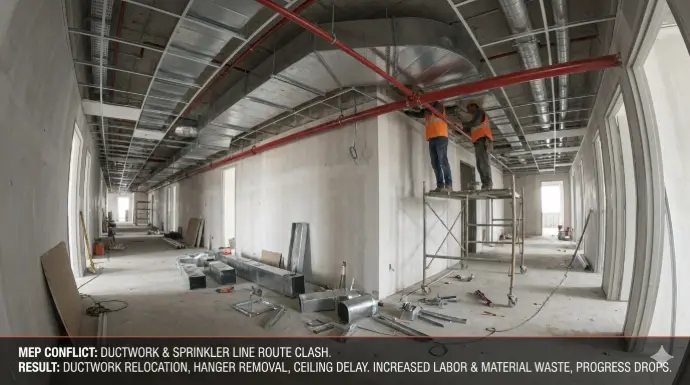
Rework that wasn’t visible upfront.
A real example: the MEP team installs ductwork along a corridor ceiling. Later, the sprinkler line is found to require the same route. The result? Ductwork needs to be relocated, hangers removed, ceiling work delayed. Labor cost increases, materials are wasted, and progress drops.
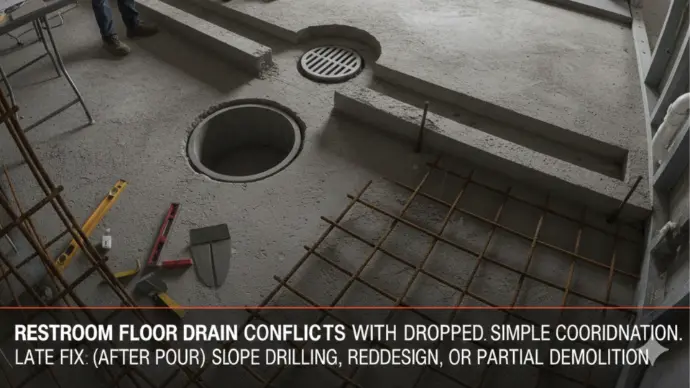
“Sudden” changes that could have been prevented.
Example: in a restroom area, the floor drain location conflicts with a dropped beam. If identified early, it’s a simple coordination fix—adjust routing, elevation, or slope. But if discovered after concrete is poured, the options become painful: core drilling, redesigning slopes, or partial demolition.

Schedule delays due to field decisions.
Example: chilled water piping needs to pass through a shaft that turns out to be crowded with cable trays and other risers. The crew pauses, waiting for instructions—who moves? Mechanical? Electrical? Structural? That waiting time rarely gets tracked properly, but its impact spreads across multiple work packages.
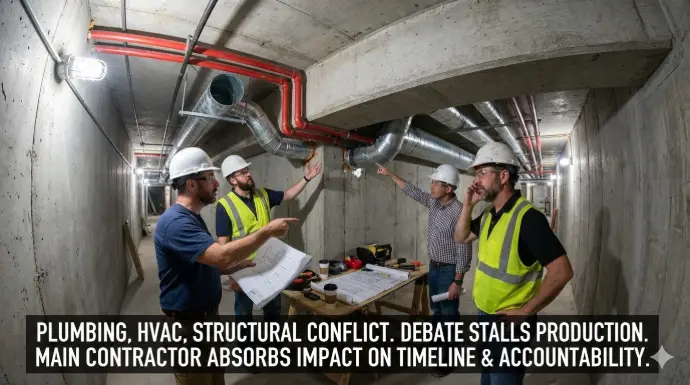
Subcontractor conflicts that drain coordination time.
Example: the plumbing subcontractor claims they installed according to shop drawings. HVAC says their route is critical. Structural insists no additional penetrations are allowed. The situation turns into debate instead of production—yet the main contractor absorbs the impact on timeline and accountability.
The root cause isn’t the people. It’s “finding out too late.”
Most clashes were already there from the start—hidden behind 2D drawings, PDF revisions, fragmented communication, and disconnected coordination.
Once everything meets on site, it’s no longer coordination… it’s cost.
This is where Clash Detection becomes a practical solution
Clash Detection (typically through BIM workflows) allows teams to identify conflicts before installation begins. So the problem gets solved in coordination sessions—not in the work zone.
The value isn’t just “finding clashes,” but what it changes operationally:
- Less rework because conflicts are resolved early
- More reliable shop drawings with fewer field revisions
- Faster decision-making because clashes are visual and measurable (less debate)
- More stable schedules because risks are identified before execution
- Better trade coordination across structure, architecture, and MEP within one model
In short:
If your project margins often leak through rework caused by late-discovered clashes, Clash Detection is one of the most rational ways to close that leak.
It’s not about “cool technology.”
It’s about preventing dismantle-and-reinstall cycles that quietly consume profit.
If you are a contractor and would like me to create a practical example of the Clash Detection implementation flow (starting from the model, coordination meeting, to issue log), please contact us for further information.